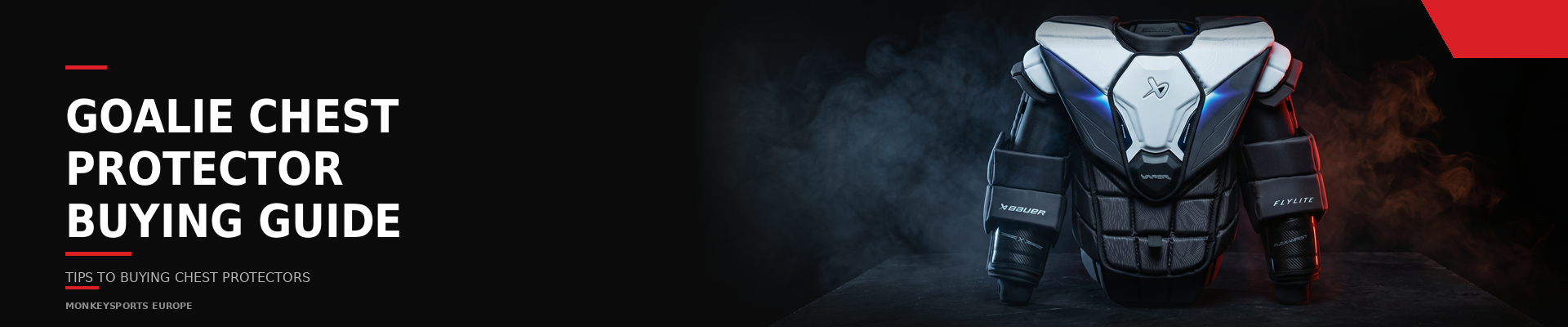
From fit checkpoints and flex preferences to usage levels and pro-level customization — everything you need to know before buying a hockey goalie chest protector.
Goalie Chest Protector Buying Guide
A goalie chest protector is one of the most personal pieces of equipment in the crease. It needs to cover the right areas, move the way you move, and feel comfortable through a full game — because if it doesn't, you'll be thinking about your gear instead of the puck.
This guide covers everything: how a chest protector should fit, the key style preferences to know before you buy, usage levels, maintenance, and what's possible through customization.
How Should a Goalie Chest Protector Fit?
A chest protector should fit snug to the body and provide as much surface coverage as possible without restricting movement. Getting the fit right requires checking four key reference points:
Fit checklist
- Neck/collar — the top of the chest protector should sit 1.5" below your T-shirt collar line. Too high causes interference with the mask; too low leaves the upper chest exposed.
- Waist/belly — the bottom of the belly section should align with your natural waistline. This ensures proper overlap with the goalie pants below.
- Arms — the arm sections should end 1–1.5" from the wrists. Too short leaves the forearm gap exposed; too long interferes with glove and blocker movement.
- Shoulder floaters — always try the chest protector on with your goalie pants to confirm the fit at the waist overlap. If possible, try it with your helmet on as well — this is the best way to confirm that the shoulder floaters don't restrict head movement or interfere with the mask.
Goalie Chest Protector Style and Preference
Two goalies of the same size can want completely different things from a chest protector. These are the most common preference points to consider before buying:
Tucked vs. untucked
The most fundamental preference is whether you tuck the belly section into your pants or wear it over the top. Tucking creates a cleaner seal and reduces the gap between chest and pants when dropping into the butterfly. Wearing it outside gives more freedom of movement but requires precise sizing to keep the gap covered during extreme stretches.
Break-in preference
Some goalies want a chest protector that's mobile right out of the box — they expect it to feel like their old broken-in unit from day one. Others prefer a stiffer unit that they break in over time, appreciating the structured squareness it provides early in its life. Neither approach is wrong; knowing your preference will help narrow down which models are worth trying.
Shoulder height and stomach flex
Shoulder floater height is a significant personal preference — some goalies want floaters that sit high for maximum upper body coverage, while others prefer them lower for better range of motion when tracking high shots.
At the stomach, preferences split between goalies who want a long, stiff belly section that sits close to the body, and those who want a clear flex point at the waist — a hinge-like feel that allows full forward range of motion. Many newer units now offer torsional flex, which means the body bends at a 45-degree angle, not just straight forward. This has become increasingly important for butterfly goalies who need to rotate and push laterally.
Usage and Maintenance
Like goalie masks, chest protectors are rated for different levels of use. Choosing the right protection level for how often you play is essential for both safety and durability.
| Level |
Sessions / Week |
Best For |
| Pro |
4–7 |
Elite/competitive players, high-intensity training |
| Senior |
2–5 |
Recreational to competitive adult leagues |
| Recreational / Lower Senior |
1–3 |
Casual leagues, house hockey, beginners |
Care tips
- Wear moisture-wicking undergarments — a proper base layer significantly reduces the sweat and moisture that collects in the unit between sessions, extending the life of the foams and reducing odor buildup.
- Dry it properly after every session — hang the chest protector in a well-ventilated area rather than leaving it packed in your bag. Consistent drying prevents foam degradation and corrosion in the hardware.
- Check elastics and straps regularly — worn or stretched elastics allow the unit to shift during play, compromising both fit and coverage. Replace them before they fail completely.
Goalie Chest Protector Customization
Off-the-shelf chest protectors cover most players well, but at the pro level, custom units are the norm. Custom ordering allows goalies to address every specific preference and coverage gap they've identified over their career.
Common custom modifications
- Reinforced shoulder floaters — added padding or a different foam composition for goalies who feel exposed in the upper shoulder area.
- Heart guard additions — a reinforced sternum/heart guard panel for extra protection against high-velocity shots.
- Bicep and forearm coverage — extended arm protection for goalies who prefer more coverage down the arm, or who feel exposed between the chest unit and their blockers/catchers.
- Custom neck height — adjusting how high the collar sits to work seamlessly with a specific mask or chin cup setup.
- Mixed sizing — it's possible to order a Large body with Medium arms, for example, to address goalies whose torso and arm proportions don't fit neatly into standard sizing.
- Wrist length — how far the arm section extends toward the glove and blocker is a personal preference; some goalies want a longer reach into the cuff, others prefer it shorter.
Custom colors are also standard practice — most pro goalies match their chest protector to their team or personal brand, tied into the same design language as their mask and leg pads.
Frequently Asked Questions
Should I try on a chest protector with my pants?
Yes — always. The waist overlap between the chest protector and your pants is a critical fit point, and you won't be able to assess it without both pieces on. If you can add your mask as well, even better — it lets you confirm the shoulder floaters don't restrict your head movement.
What is torsional flex and do I need it?
Torsional flex refers to the ability of the chest protector to bend at a 45-degree angle — rotating and leaning sideways — rather than just straight forward. It's increasingly standard in modern units and particularly valuable for butterfly goalies who make lateral pushes and rotational saves regularly.
How long should a goalie chest protector last?
With proper care, a senior-level chest protector can last 3–5 years depending on frequency of use. Pro-level units used 4–7 times per week may need replacing sooner. Inspect the foam compression, elastics, and strap integrity annually — compressed foam no longer absorbs impacts effectively and should be replaced.
Does the chest protector need to match my other gear?
Not for fit or performance purposes — but brand compatibility can matter for how certain pieces sit and overlap. Bauer chest protectors, for example, are designed to work with Bauer goalie pants. Mixing brands can occasionally create coverage gaps at the waist, so always verify the overlap when trying on mixed-brand setups.
What's the difference between tucked and untucked wear?
Tucking the belly section into the pants creates a tighter, more sealed connection between the two pieces — reducing gaps when dropping into the butterfly. Wearing outside the pants is more comfortable for some goalies and allows a bit more freedom, but requires a precise fit to maintain coverage during extreme lateral movements.
Shop Goalie Chest Protectors
Pro, senior and junior chest & arm protectors from Bauer, CCM, Warrior and more — available at MonkeySports.
SHOP CHEST PROTECTORS →