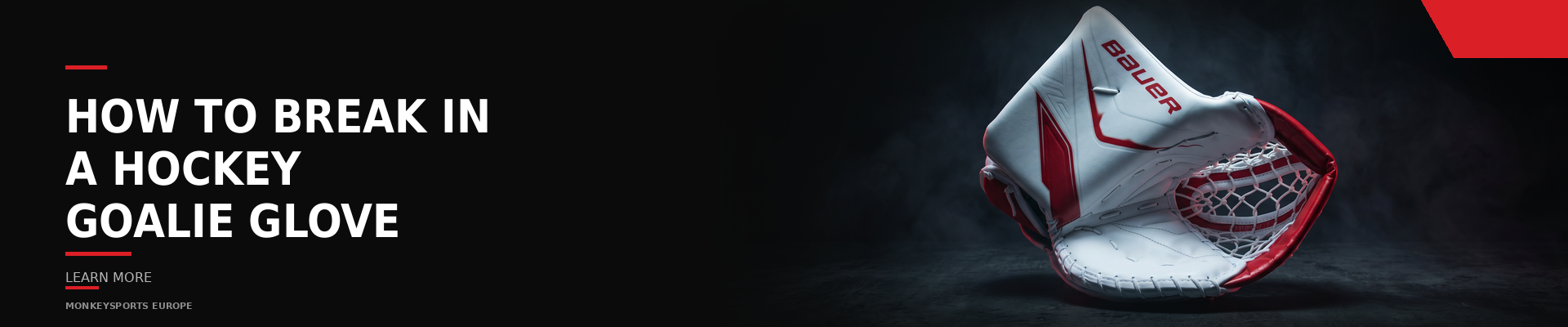
A stiff new glove won't perform the way you need it to. Learn the best methods for breaking in a hockey goalie glove — from heat and oil conditioning to the glove wrap trick — and get it game-ready fast.
How to Break In a Hockey Goalie Glove
A new goalie glove straight out of the box is stiff, unresponsive, and won't close the way you need it to in a game. Breaking it in properly transforms it from a rigid piece of equipment into a natural extension of your hand — one that closes cleanly, holds its shape, and gives you real confidence when tracking down a shot.
This guide covers everything: why the break-in process matters, the three most effective methods, and how to speed things up when you need the glove game-ready fast.
Why Do You Need to Break In a Goalie Glove?
Unlike player gloves, a goalie catch glove needs to open and close in a very specific way — and the stiffer the glove, the harder that is. A properly broken-in glove gives you four key advantages:
Comfortable fit
A broken-in glove molds to the shape of your hand, reducing the effort required to open and close it and minimizing fatigue during long games or practices.
Improved grip and puck control
Softened glove material grips the puck more securely. A stiff glove tends to deflect shots rather than absorbing and controlling them — the last thing you want in a tight situation.
Injury prevention
A stiff, unbroken glove puts extra strain on the hand and fingers when catching hard shots. Proper flexibility reduces that stress and helps protect against hand injuries over time.
Better durability
Breaking in the glove correctly — rather than forcing it — helps the materials flex naturally rather than crack or delaminate. Done right, it extends the glove's useful life significantly.
3 Ways to Break In a Hockey Goalie Glove
Each method has its advantages — choose one based on how much time you have and how your glove is constructed.
1. Using heat
Controlled heat softens the glove materials, making them more pliable and easier to shape. Use a gentle heat source — a hair dryer on a low setting works well — and keep it moving to distribute warmth evenly across the palm, fingers, and pocket. Never use direct or intense heat as this can damage the foam, leather, or synthetic materials.
Once the glove feels warm and pliable, put it on your hand and repeatedly open and close it to shape the pocket. Let it cool in the closed position to help it retain the shape.
2. Using oil or conditioner
A glove-specific conditioner or a small amount of mitt oil applied to the palm and pocket area can soften the materials and improve flexibility. Work it in gently with your fingers, focusing on the pocket and the areas around the fingers and thumb break.
Always use products designed for the glove's specific material. Avoid over-application — too much oil can leave residue on the catching surface and affect your grip on the puck.
3. Repetitive use and training
The slowest method — but often the most reliable for achieving a truly custom fit. Regular use during practices, drills, and games gradually molds the glove to the exact contours of your hand. The more shots you catch, the more the pocket shapes itself to your natural catching position.
To speed this up between sessions, use a glove stretcher or wrap the glove tightly in the closed position when it's not in use — this helps maintain the shape and keeps the break-in progressing even when you're off the ice.
You can also incorporate glove-specific drills into your off-ice routine — wall ball exercises and repetitive catch-and-release movements are effective for loosening the pocket faster.
How to Break In a Goalie Glove Fast
Need the glove game-ready quickly? These two methods can significantly accelerate the process.
The glove wrap method
This is the easiest fast-track option and requires no equipment. After each use, make sure the glove is dry and clean, then wrap it tightly in the fully closed position using a rubber band, strap, or even a skate lace. Leave it overnight or between sessions.
Over time, the glove naturally adapts to the closed shape — making it easier to snap shut when a shot comes in. Simple, free, and effective when done consistently.
Freezing the glove
A less conventional but surprisingly effective method. Place the glove — in the closed, wrapped position — in a freezer for a few hours. The cold causes the materials to contract and then re-expand more pliably when they warm up, helping them settle into the desired shape.
Important: the glove must be completely dry before freezing. Any moisture inside the glove will freeze and can damage the internal foam and stitching. Once removed from the freezer, let it thaw fully at room temperature before use — never rush the thawing process with heat.
Frequently Asked Questions
How long does it take to break in a goalie glove?
With repetitive use alone, it typically takes 10–20 hours of ice time to fully break in a glove. Using heat, oil, or the wrap method in combination with regular use can cut this down significantly — sometimes to just a few sessions.
Can I use any oil on my goalie glove?
No — always use a conditioner or oil specifically designed for the material your glove is made from. Products not intended for hockey equipment can degrade the foam, affect the grip surface, or cause the materials to break down faster than normal.
Is it safe to use heat on all goalie gloves?
Gentle heat from a hair dryer on a low setting is generally safe for most modern goalie gloves. Avoid direct or intense heat sources — open flames, clothes dryers, or heating vents — as these can warp the foam, melt synthetic materials, and damage the structural integrity of the glove.
Should I break in my glove before my first game?
Ideally yes — a stiff glove in game conditions can cost you saves and increases injury risk. Try to get at least a few practice sessions in before using a new glove in a competitive game, or use the fast methods above to soften it beforehand.
Can I break in a goalie glove without getting on the ice?
Yes. The glove wrap method, heat application, oil conditioning, and off-ice catch drills (using a tennis ball against a wall, for example) are all effective ways to progress the break-in without needing ice time.
Shop Goalie Catch Gloves
Pro, senior and junior catch gloves from Bauer, CCM, Warrior and more — available at MonkeySports.
SHOP GOALIE GLOVES →