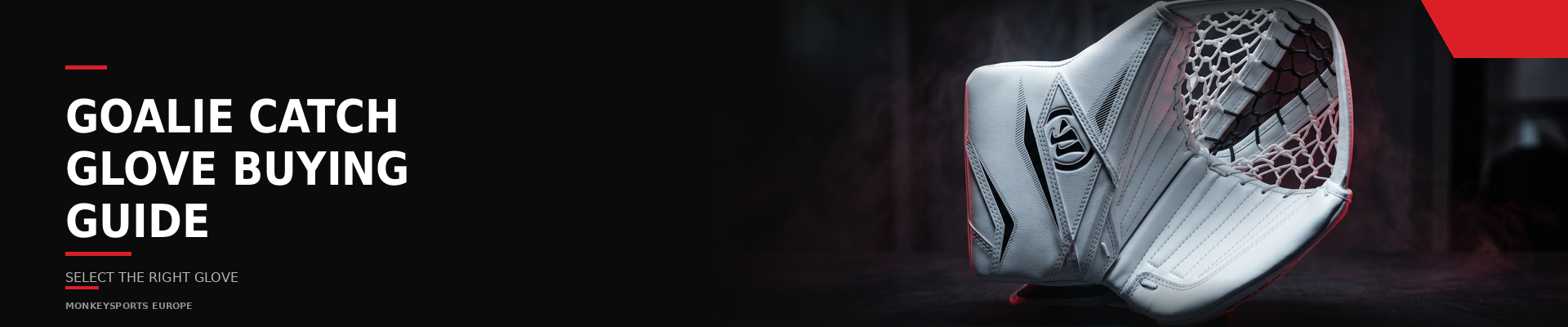
The catch glove is the cornerstone of a goalie's arsenal — it affects stance, rebound control, stickhandling, and agility. This guide covers fit, break angles, glove styles, usage levels, and customization options.
How Should a Goalie Glove Fit?
The catch glove is the cornerstone of a goaltender's arsenal — it profoundly influences stance, rebound control, stickhandling, and overall agility. Getting the fit right is not optional: it directly affects your ability to make saves.
A properly fitting goalie glove should snugly conform to the contours of your hand, with your fingertips reaching the end of the finger stalls for optimal control. The fit across the hand should be secure without restricting movement.
Tip: Always try on the glove while wearing a chest protector — this guarantees unrestricted wrist mobility, which is critical for those game-saving maneuvers. A well-fitted glove can genuinely be the difference between a save and a goal.
Goalie Glove Styles: Break Angle
One of the most important — and least understood — aspects of catch glove selection is the break angle. The break angle measures from the cuff's base towards the pocket, and the angle to the T's tip when the glove is closed. It dictates the glove's closure mechanism and optimal hand positioning for catching.
Flat / 0° break
The glove lies flat when open. Preferred by goalies who play with a more upright stance and like to present a large flat surface to the shooter. Offers excellent visual coverage but requires more hand strength to close quickly.
Mid / 45° break
The most popular option — a middle ground between flat and full. The hand naturally sits at a comfortable angle, making it versatile for a wide range of playing styles and stances. Works well in both butterfly and hybrid systems.
Full / 90° break
The glove closes like a clamshell. Preferred by butterfly goalies who drop to their knees frequently — the angle means the glove naturally faces the shooter when in butterfly position. Closes quickly but offers less coverage when standing upright.
Glove Usage & Maintenance Guide
Choosing the right glove also means matching it to your playing frequency and the intensity of your environment:
| Glove Level |
Sessions per Week |
Best For |
| Pro |
4–7 sessions |
Elite / competitive play, rigorous use |
| Senior (mid-high) |
2–5 sessions |
Regular league play |
| Senior (entry) |
1–3 sessions |
Recreational / occasional use |
Beyond frequency of use, shot intensity and sweat accumulation are key factors. High-intensity play increases wear on the palm and closure mechanism. Sweat buildup inside the gear affects durability — proper ventilation and maintenance routines are essential.
Maintenance basics: Dry out the glove thoroughly after every session. Never leave it stuffed in a bag. Allowing moisture to sit inside the glove degrades the foam and palm materials significantly faster. Regular drying extends lifespan considerably.
Goalie Glove Customization
Custom goalie gloves typically offer three areas of personalization — palm protection, pocket T style, and color:
Palm protection levels
- Game-ready palm — The thinnest option, designed for immediate use with easy closure. Best for goalies who want maximum puck feel and a glove that's ready to perform out of the box.
- Pro palm — Slightly thicker for enhanced protection. Requires some break-in time to reach optimal performance. The most popular choice for competitive goalies.
- Practice palm — The thickest option, offering maximum protection against high-velocity shots. Requires additional effort to break in but provides the best long-term durability.
Pocket T style
The T-bar runs across the pocket of the glove and affects how the glove closes and how the puck sits in the pocket. Different T styles affect closure speed and puck retention — your preference often comes down to personal feel and what you're used to. Many brands offer standard, shallow, or deep T options.
Color & design
Custom colorways allow you to match your full set — glove, blocker, pads, and mask — for a unified look. Most brands offer colour-matching services for custom orders.
Frequently Asked Questions
What break angle is best for butterfly goalies?
A full (90°) break is generally preferred for butterfly goalies — when in the butterfly position, the glove naturally faces the shooter at the correct angle. Mid break is also popular and suits a hybrid style.
Should I try the glove on with or without a chest protector?
Always try it on with a chest protector — the cuff of the glove interacts with the chest protector's arm, and you need to verify full wrist mobility before buying. A glove that feels perfect bare-handed may restrict movement when fully geared up.
How do I break in a new catch glove?
The most effective method is repeated on-ice use. Some goalies use a ball to repeatedly open and close the glove off the ice. Avoid using excessive heat or soaking the glove — this can damage the foam and palm materials.
How long does a goalie catch glove last?
It depends on your level and frequency of play. A pro-level glove used 4–7 times per week may last 1–2 seasons. Entry-level gloves used 1–3 times per week can last several seasons with proper care. Drying the glove after every session is the single most effective way to extend its lifespan.
Shop Goalie Catch Gloves
Senior, intermediate, junior and youth — or build your own custom catch glove.
SHOP CATCH GLOVES →